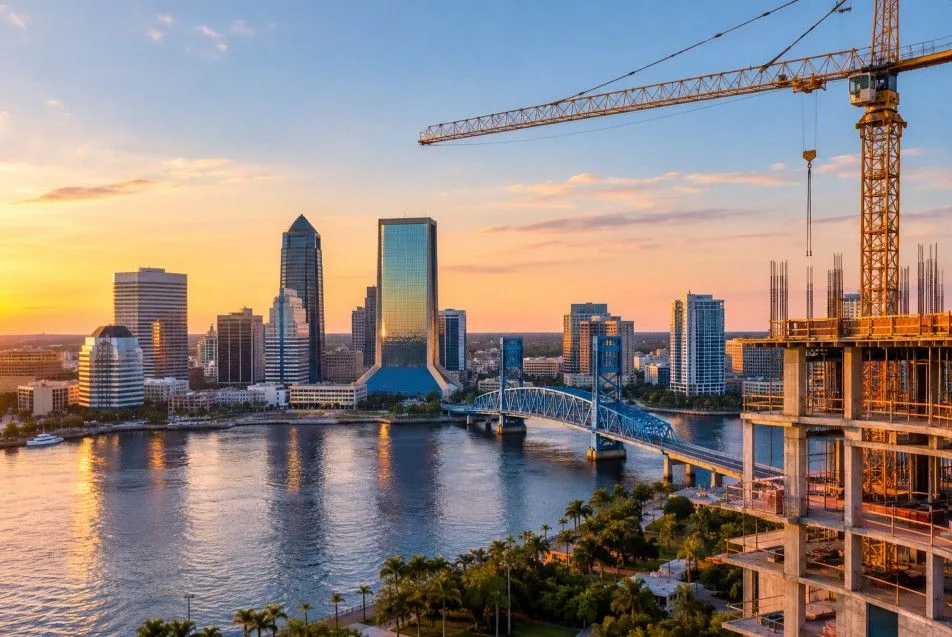
There are many ways to analyze a city before investing. You can look at population data, employment, prices, rents, or the new businesses moving into the area. But there is one particularly tangible indicator: the cranes.
The reason is simple. Behind every construction project, there is an investment decision. Developers, universities, hotels, airports, and local governments do not commit hundreds of millions of dollars without a reason. They do so because they anticipate activity, demand, and growth in the years ahead.
Jacksonville is showing several of these signals at the same time.
In August 2026, the Jacksonville metropolitan area authorized 1,702 new residential units. In the previous months, the figures were 844 units in July, 1,541 in June, 869 in May, and 1,432 in April.
A building permit does not mean that a home has already been completed, nor does it guarantee the outcome of an investment. However, it does provide insight into where developers continue to find the fundamentals to create new supply. And August was, within this recent series, a month of particularly strong activity.
This reinforces an idea we have been following for some time: Jacksonville is still not a market that many Latin American investors have on their radar, but it is no longer an invisible city to institutional capital.
One of the most interesting areas is along the St. Johns River, on the site where Jacksonville Landing operated for years.
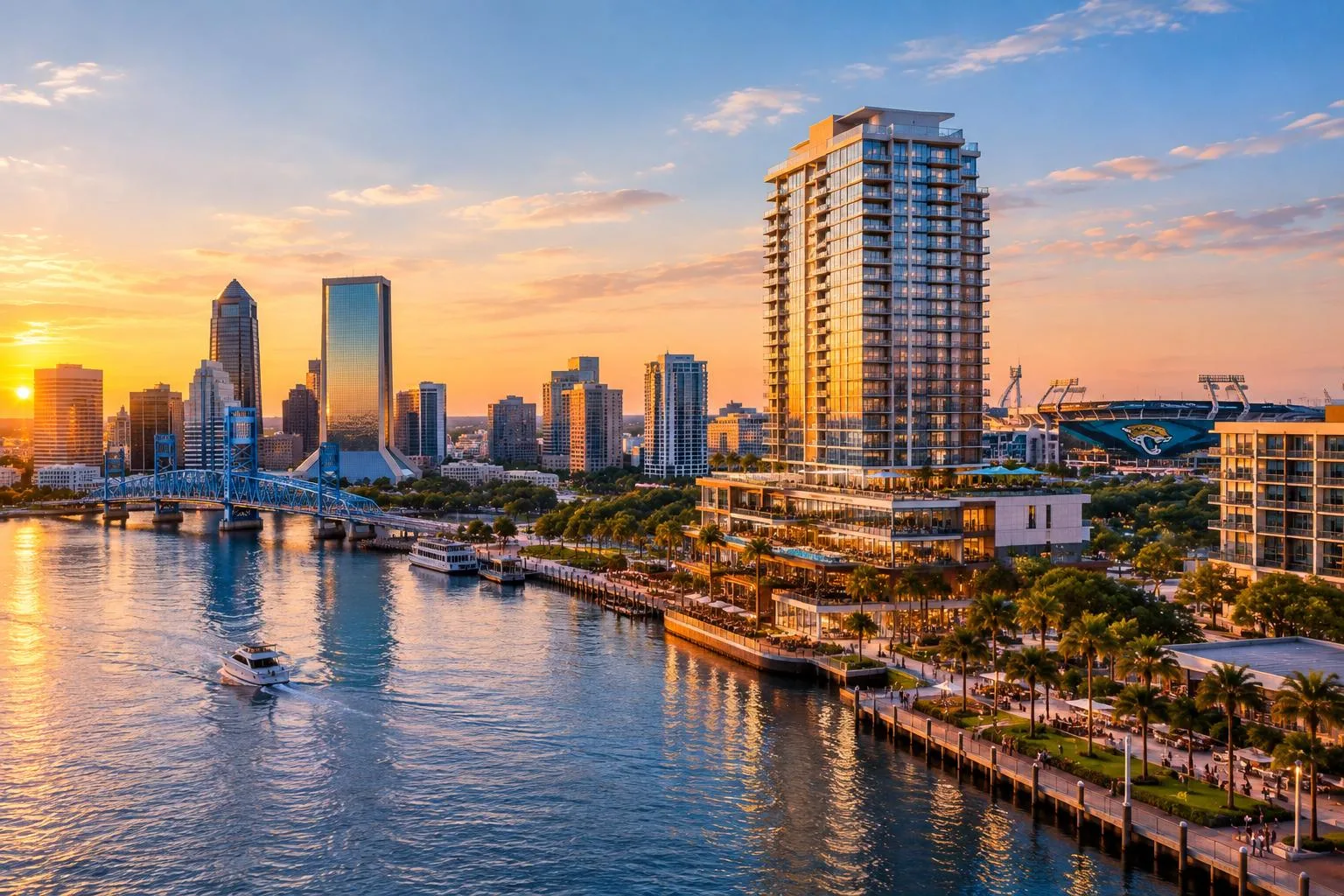
Gateway Jax is planning Riverfront Plaza Hotel & Residences, a 20-story tower with an estimated cost of USD 271.5 million. The project includes 51 condominiums, a luxury hotel, restaurants, and public spaces.
In September, the Downtown Investment Authority unanimously recommended a public incentive package of nearly USD 59.4 million. The initiative still needs to go before the City Council, so it is important to view it as a project moving forward rather than a completed development.
Beyond that stage, the relevant point for the market is something else: Downtown is once again attracting large-scale, high-end projects along a riverfront that has historically had enormous potential but remained underutilized for many years.
The activity is not limited to Riverfront Plaza. Jacksonville is also moving forward with the USD 1.4 billion transformation of the Jaguars' stadium, new residential developments in Pearl Square and Southbank, and the future Museum of Science and History on Northbank. These are different projects, but together they show a city adding housing, entertainment, public spaces, and urban activity around Downtown and the St. Johns River.
Jacksonville's transformation does not depend solely on private real estate development.
The University of Florida opened its graduate campus in LaVilla, Downtown, in 2026. The project includes a new approximately 185,000-square-foot academic building, with construction expected to begin in late December.
The campus will offer programs related to artificial intelligence, cybersecurity, engineering, business, law, and health sciences. It will also host research initiatives focused on areas such as semiconductors, microelectronics, and strategic technologies.
For a city, this type of investment has an impact beyond the building itself. It brings students, professors, researchers, professionals, and companies connected to these sectors. In other words, it adds daily activity and housing demand to an area seeking to establish itself as a stronger urban center.
Another project worth following is the expansion of Jacksonville International Airport.
The new Concourse B will add six boarding gates and is scheduled to begin operations in January 2027. The project expands airport capacity and supports the growth of a region that is gaining importance as a logistics, business, and residential hub in North Florida.
Infrastructure alone does not determine the value of a property. But it does help us understand which cities are preparing for a higher level of activity in the years ahead.
This point is key.
A city that is building more is also adding new supply. This can create competition between properties, especially in areas where large numbers of houses, townhomes, or multifamily units are entering the market at the same time.
That is why investing successfully is not simply about identifying a growing city. It is about choosing carefully within that city.
You need to look at what is being built nearby, the prices at which new properties are entering the market, actual rental rates, HOA or CDD expenses, property taxes and insurance costs, and who will manage the property once it has been purchased.
Jacksonville's multifamily market shows a balanced signal: unit absorption has been exceeding deliveries, while rents remain relatively stable and occupancy continues to be solid. This does not eliminate the need for analysis. It makes that analysis even more important.
Jacksonville is not trying to become Miami or Orlando. Its appeal lies precisely in being at a different stage of maturity, with more accessible entry prices and an economy that combines the port, logistics, healthcare, finance, education, technology, and business activity.
The city is in a period of construction, investment, and infrastructure development. Cranes do not replace the financial analysis required for each investment, but they help us understand where the market is looking.
And in real estate, sometimes the best time to study a city is while it is still being built.
Gustavo Fischman
Co-Founder, Miami Tango Investments
U.S. Census Bureau / FRED: building permits in the Jacksonville metropolitan area
Downtown Investment Authority and Riverfront Plaza Hotel & Residences project
University of Florida: Jacksonville campus and LaVilla development
MMG Real Estate Advisors: Jacksonville Multifamily Market Report, Q2 2026

Why is it the next real estate investment opportunity for 2026–2030?
Join us to learn what is driving Jacksonville's growth, how its real estate market is performing today, and what opportunities are available for Latin American investors.
We will discuss properties starting at USD 100,000, rental demand, and financing options for foreign investors.
September 15, 2026
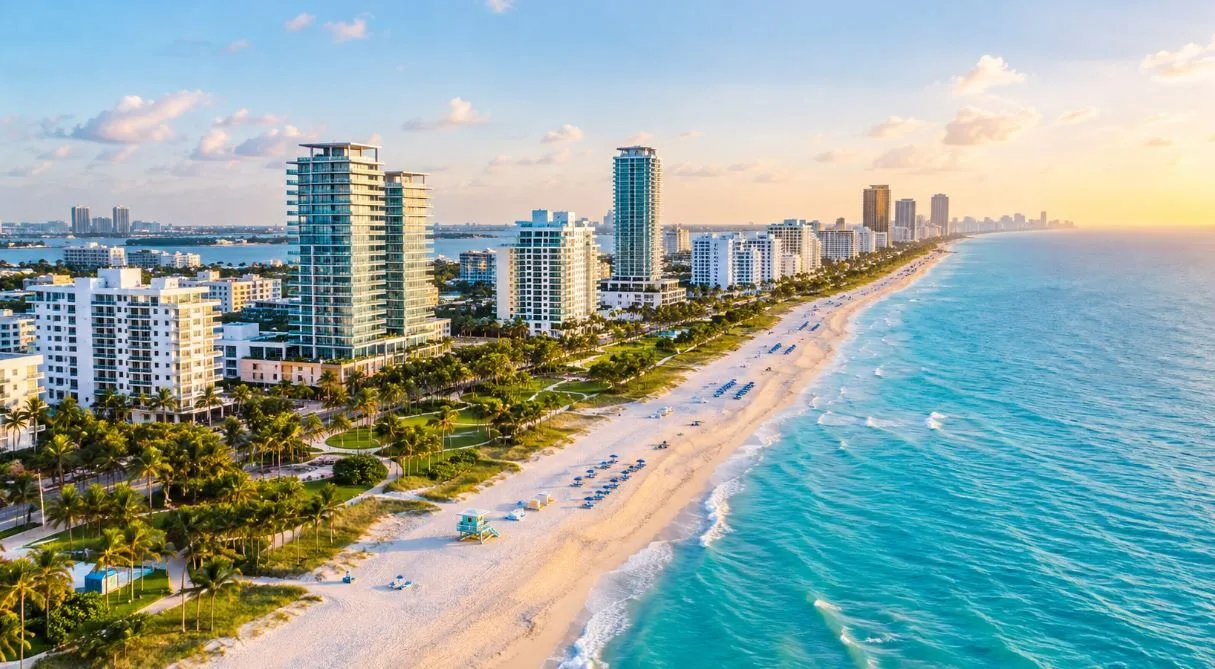
North Beach is gaining prominence on the Miami Beach real estate map. New developments, public investment, proximity to the ocean and a residential character are driving its transformation and attracting the attention of developers, buyers and international investors.
Read moreSeptember 1, 2026
Jacksonville is growing by 100+ people per day and has the lowest entry price in Florida. Data, comparison with Miami and Orlando, and how to invest.
Read more
August 26, 2026
Zillow’s latest report shows a more stable U.S. real estate market, with increased inventory and better negotiating conditions for buyers. We analyze what this means for Miami, Orlando, and Jacksonville, and why many investors see this stage of the market as a potentially strategic entry point.
Read more