Zillow updates its forecast for the U.S. real estate market
Over the past few days, Zillow, one of the leading real estate platforms in the United States, released an updated forecast for the residential real estate market over the next twelve months.
The report confirms a trend that many analysts had been anticipating: the U.S. housing market is entering a period of stabilization, following several years of significant home price increases driven by the pandemic.
According to Zillow, the expected change in average U.S. home values over the next twelve months is close to 0%, although differences between regional markets are becoming increasingly pronounced. Some cities continue to show growth prospects, while others are undergoing corrections after experiencing extraordinary price increases in recent years.
For many investors, however, the most important news is not the 0%, but rather the shift in the market environment.
During 2020, 2021, and part of 2022, the U.S. housing market experienced one of the fastest growth cycles in decades.
Mortgage rates close to 3%, limited housing supply, and exceptionally strong demand drove significant price increases across much of the country.
Today, the environment is different.
30-year mortgage rates continue to move at approximately 6% to 7%, available inventory has increased compared with pandemic-era lows, and buyers have greater negotiating power.
Rather than representing a negative signal, many specialists view this process as a normalization of the market, where prices are increasingly determined by the economic fundamentals of each city.
Many headlines focused solely on the fact that Zillow projects an essentially flat housing market over the next year.
However, that is not the report’s main takeaway.
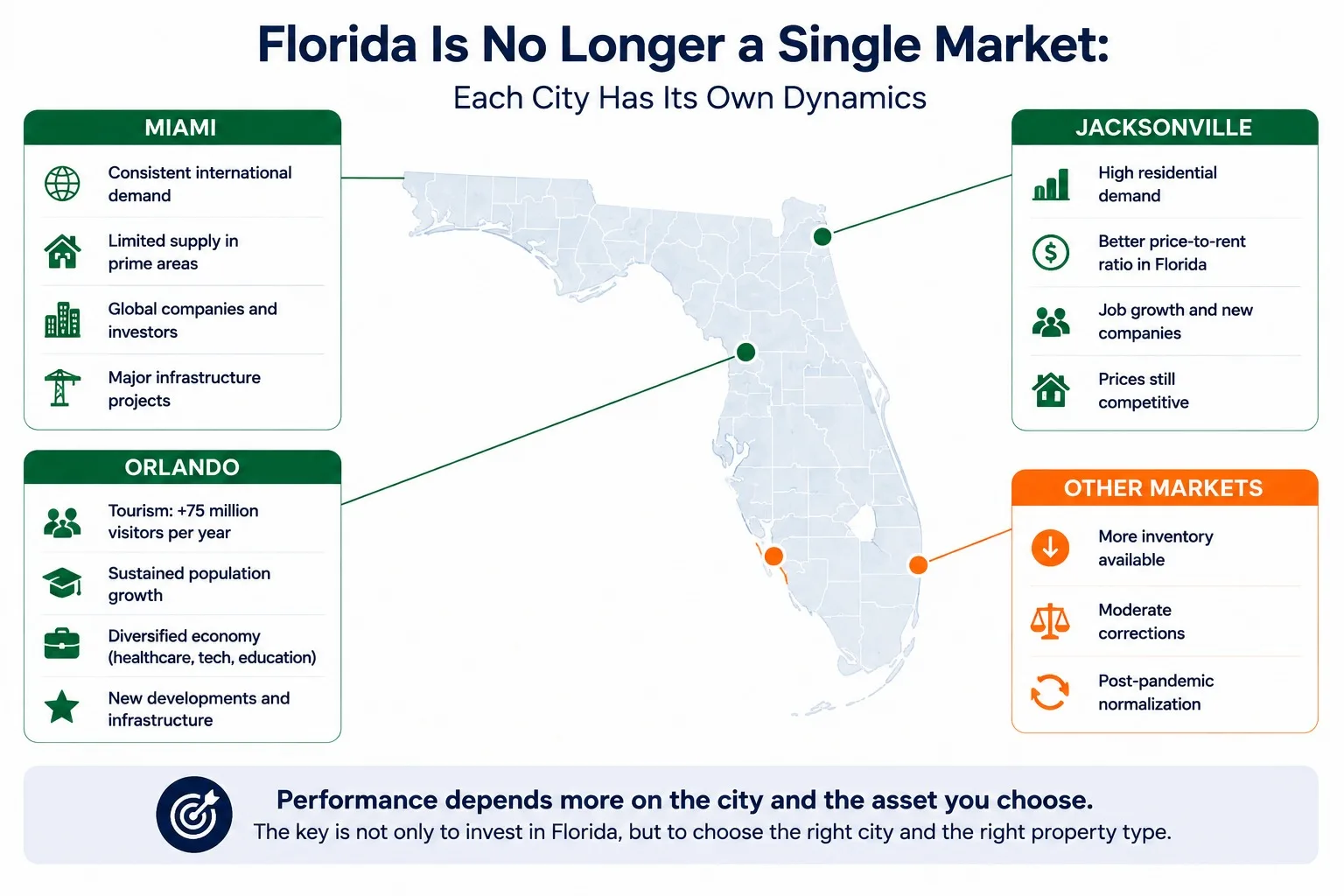
What is truly relevant is that the United States is no longer behaving as a single real estate market.
While some regions are experiencing moderate adjustments after the strong growth recorded between 2020 and 2022, others continue to show solid fundamentals thanks to economic growth, population migration, and job creation.
For an investor, this shift is fundamental.
It is no longer enough to say, “I want to invest in Florida.” Today, choosing the right city and the right asset is more important than ever.
Zillow’s report shows that some markets in the state, particularly in Southwest Florida, are experiencing a moderate correction following the extraordinary growth seen during the pandemic.
Cities such as Cape Coral and Punta Gorda have higher levels of available inventory and less accelerated demand than they did a few years ago.
However, extrapolating this situation to all of Florida would be a mistake.
Each market responds to its own economic, demographic, and employment fundamentals.
It is precisely this difference that is creating new opportunities for investors who analyze the market with a long-term perspective.
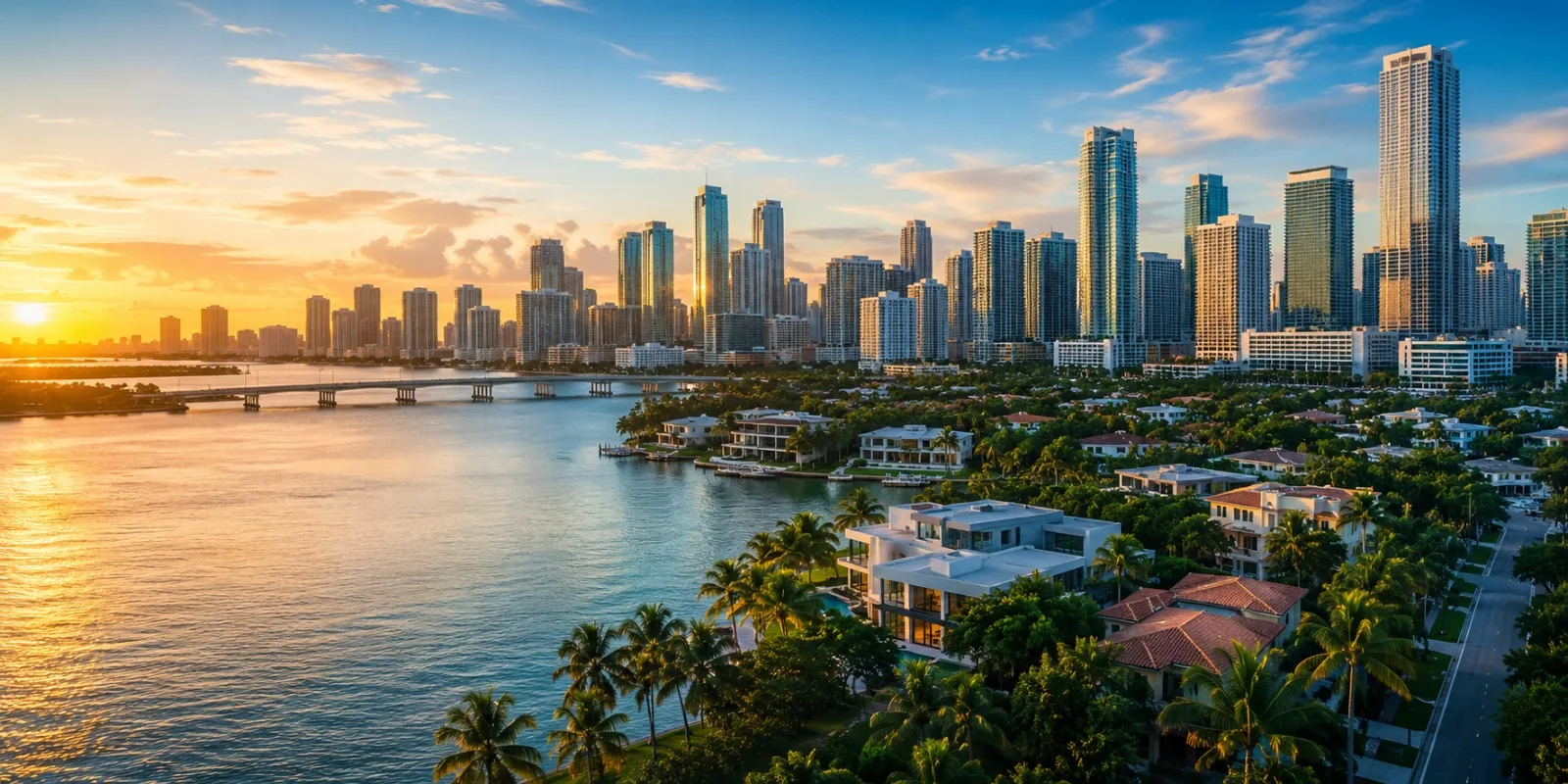
Miami maintains characteristics that clearly differentiate it from other markets across the state.
These include:
Strong international demand, particularly from Latin America and Europe;
The continued arrival of financial and technology companies and investment funds;
Limited land availability in the areas with the highest demand;
Major urban development projects such as Miami Worldcenter, Miami Freedom Park, and new infrastructure investments.
These factors continue to support real estate demand and help explain why Miami is showing greater resilience than many other markets across the country.
The new market environment is also creating opportunities for other types of investors.
Orlando continues to strengthen its position thanks to an increasingly diversified economy. In addition to tourism, sectors such as healthcare, education, technology, and logistics continue to drive housing demand. The opening of Universal Epic Universe and Disney’s announced USD 17 billion investment plan further reinforce the region’s growth potential.
Meanwhile, Jacksonville continues to stand out as one of the Florida markets offering a strong balance between purchase price and rental income potential.
Its population growth, the arrival of new companies, and strong residential demand make it one of the cities attracting increasing attention from investors seeking rental income and long-term appreciation potential.
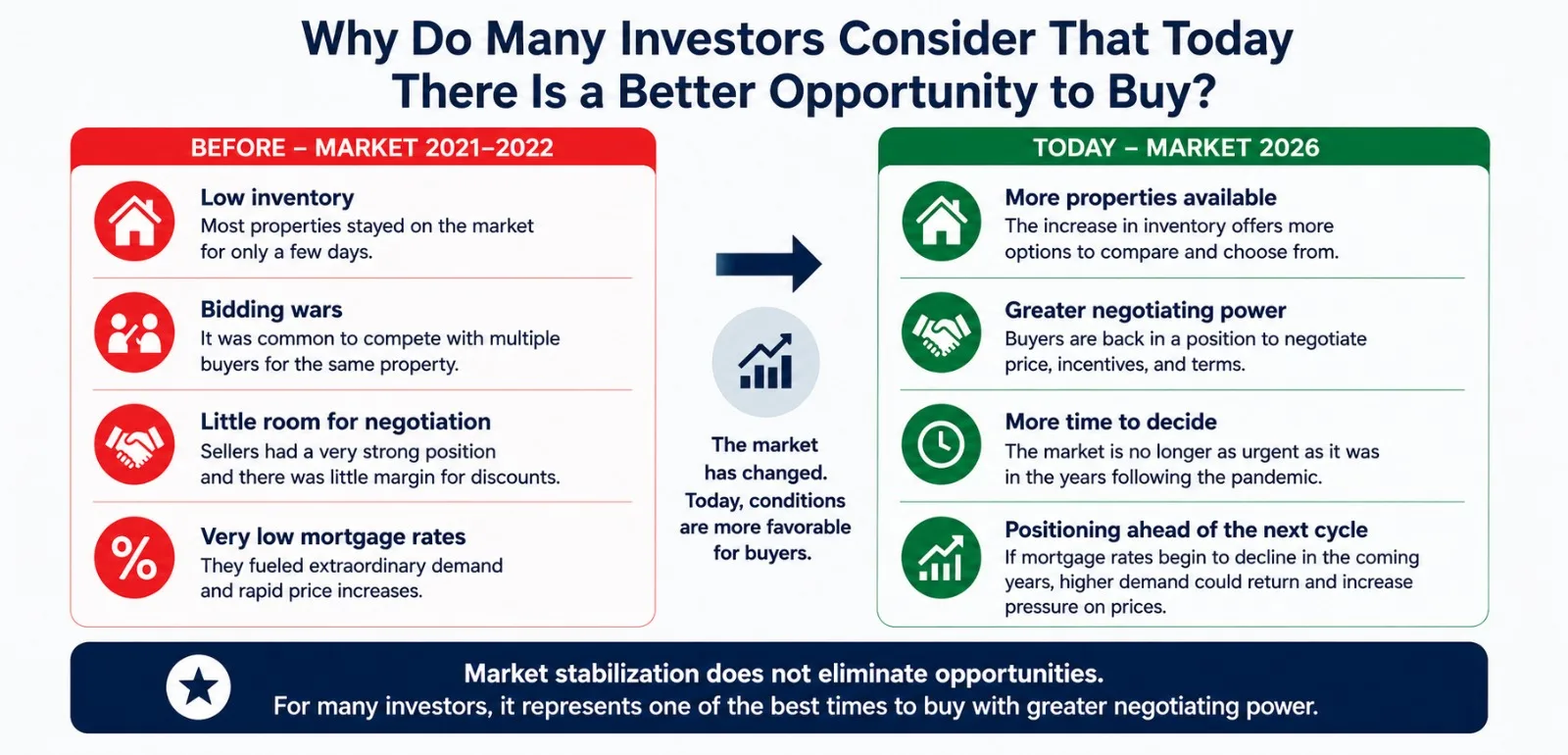
During the years following the pandemic, buying a property meant competing with numerous buyers at the same time.
Homes sold quickly, multiple offers were common, and there was very little room for negotiation.
Today, the environment is beginning to change.
There is more inventory, greater negotiating power, more incentives, and more time to evaluate different opportunities.
For investors with a long-term perspective, this type of market can offer better entry conditions than markets dominated by excessive optimism and competition.
Although no one can accurately predict how the market will behave in the future, there is one factor that most analysts continue to monitor closely: interest rates.
Over the past two years, higher financing costs have limited part of the demand.
If rates gradually decline over the coming years, it is reasonable to expect the number of active buyers to increase again, potentially increasing competition for well-located properties.
For this reason, many investors believe that periods of stabilization can represent an opportunity to position themselves ahead of a potential new cycle of increased market activity.
Not because there is any guarantee of immediate appreciation, but because the current environment allows buyers to enter with greater negotiating power than during the years of peak market activity.
Zillow’s latest report confirms that the U.S. real estate market is entering a different phase.
The period when virtually every city was growing at the same pace appears to be behind us.
Today, selecting the right market is once again one of the most important advantages for an investor.
While some markets are going through a normalization process, others continue to be supported by structural factors such as population growth, business expansion, infrastructure investment, and sustained housing demand.
For those looking to invest in Florida, the current environment offers a combination that was difficult to find a few years ago: more inventory, greater negotiating power, and solid fundamentals in cities such as Miami, Orlando, and Jacksonville.
Because ultimately, the best opportunities do not always appear when everyone wants to buy, but when the market allows investors to analyze carefully, negotiate more effectively, and position themselves strategically for the long term
September 28, 2026
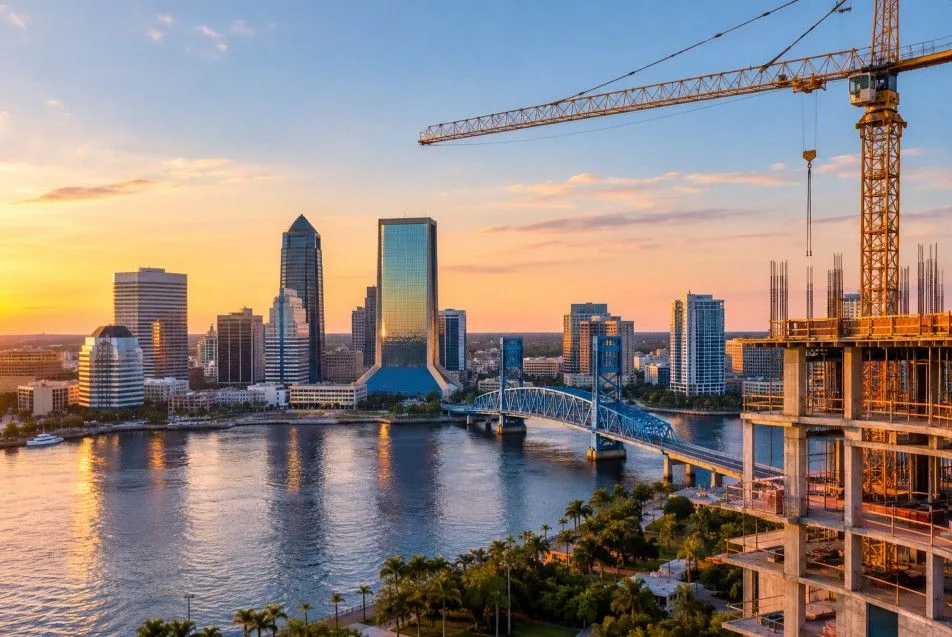
Construction activity, new projects in Downtown, and infrastructure investment help explain why Jacksonville is beginning to attract more attention within Florida's real estate market.
Read more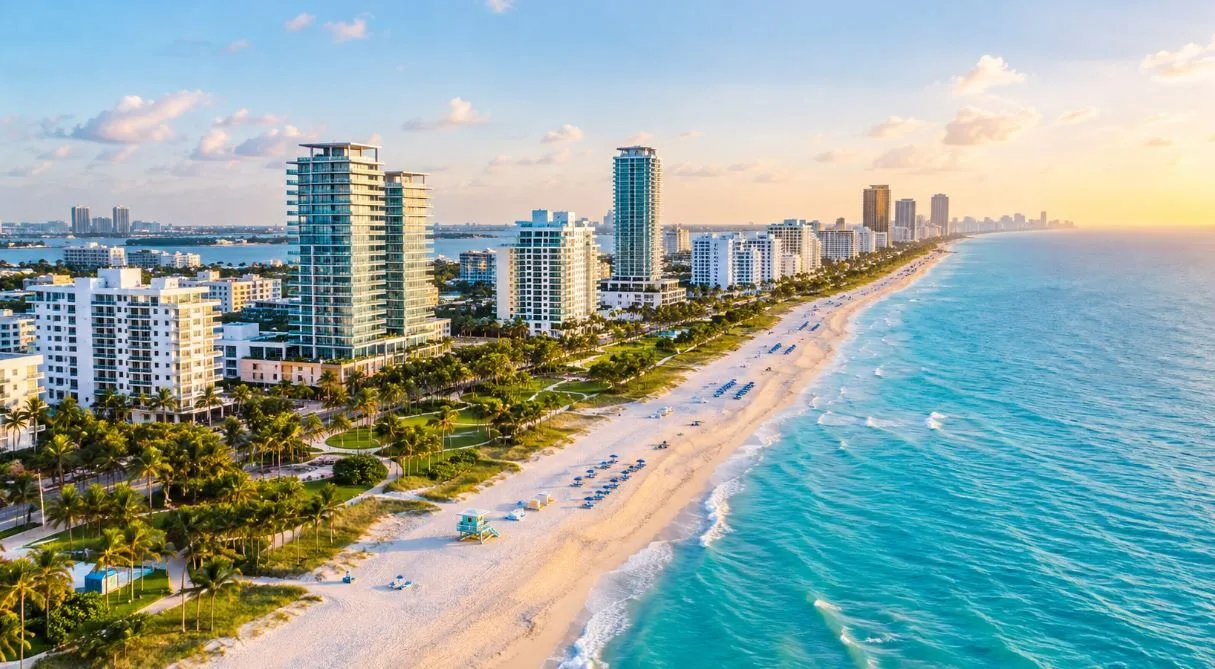
September 15, 2026
North Beach is gaining prominence on the Miami Beach real estate map. New developments, public investment, proximity to the ocean and a residential character are driving its transformation and attracting the attention of developers, buyers and international investors.
Read more
September 1, 2026
Jacksonville is growing by 100+ people per day and has the lowest entry price in Florida. Data, comparison with Miami and Orlando, and how to invest.
Read more